
High-protein breakfasts (and why morning protein matters)
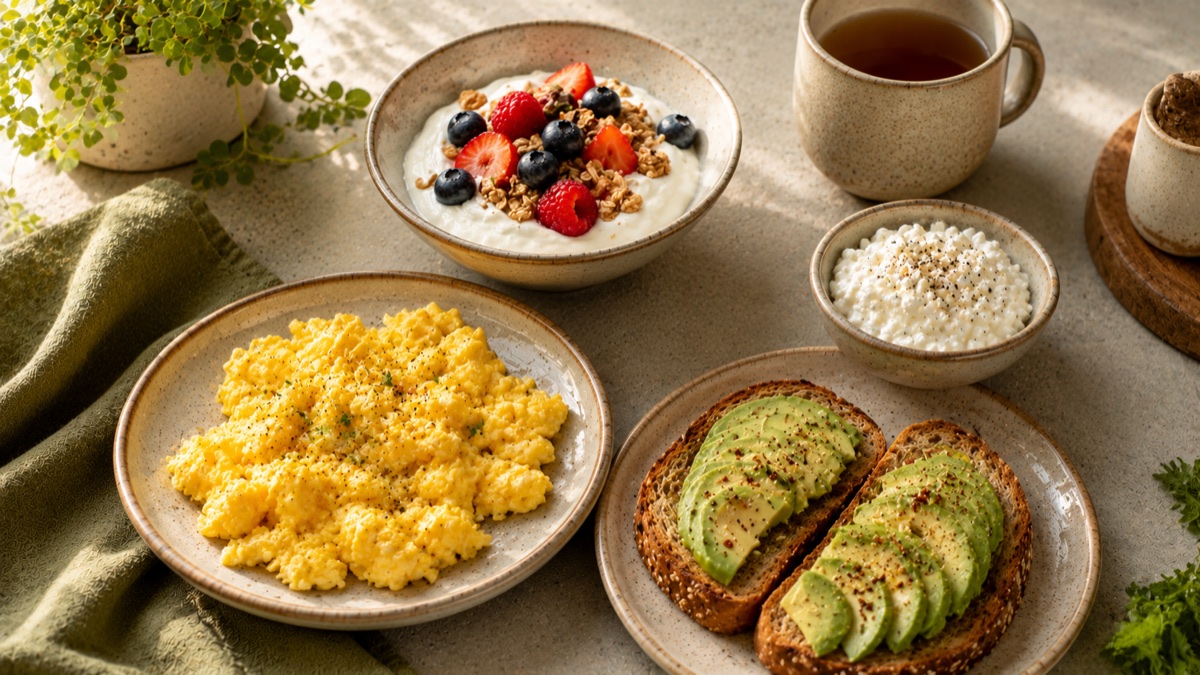
Breakfast is where most people go wrong on protein — toast, cereal or pastries, then a mid-morning crash. Front-loading protein at breakfast is one of the simplest upgrades you can make.
Why morning protein matters
A protein-rich breakfast keeps you full for hours, blunts sugar cravings, and sets up steady energy instead of a spike-and-crash. Aim for 25–30 g — the same target as any other meal.
Easy high-protein breakfasts
- eggs any style with vegetables, plus a slice of whole-grain bread;
- Greek yogurt with berries, chia and a few nuts;
- cottage cheese with cucumber and pumpkin seeds;
- savory oats with a soft egg and greens;
- a tofu scramble with vegetables;
- smoked salmon or mackerel on rye.
Each lands near 25–30 g with minimal effort.
For busy mornings
Prep ahead: overnight oats with yogurt, egg muffins baked on the weekend, or a quick shake with Greek yogurt and berries. Ten seconds of planning beats a pastry every time.
Evidence-based PDF guides — anti-age, gut health, detox and more. Get them free, straight to your inbox.
Browse the guides →Frequently asked questions
How much protein should breakfast have?
Aim for about 25–30 g, the same as other meals. That’s roughly three eggs, a cup of Greek yogurt, or cottage cheese with seeds.
Why eat protein at breakfast?
It keeps you full for hours, reduces sugar cravings later, and gives steady energy instead of a mid-morning crash from a carb-heavy breakfast.
What are quick high-protein breakfasts?
Greek yogurt with berries and nuts, eggs with vegetables, cottage cheese with seeds, savory oats with an egg, or smoked fish on rye.
Protein breakfasts, made for you
The free K Lab assessment builds high-protein breakfasts and a full day of recipes around your tastes — so mornings start you off full and steady.
This article is educational and not medical advice.